This past weekend, Andrew and I attended Empowered to Connect Adoption/Foster Parenting Conference sponsored by Show Hope. We had a long drive to Chicago Illinois to get there! Chicago was much colder than where we live! In fact, on Friday it was snowing! We had a wonderful time! For one thing it had been a while since we had weekend that we could spend together with no responsibilities (and no homework for Andrew.) It was nice just to get away together and enjoy each other's company!
I highly recommend Empowered to Connect to adoptive and foster parents or to prospective parents! We learned so much this weekend about parenting kids who come from hard places, such as prenatal stress, difficult birth, early hospitalization, trauma, neglect, and abuse. Mostly, Andrew and I learned how much we don't know! But we also came away with powerful resources and information about where to go for help if we need it!
Dr. Karyn Purvis, Amy and Micheal Monroe in a Q& A Session
We figured a trip to Chicago wouldn't be complete without trying some Chicago style, deep dish pizza!
Today is the last day in National Adoption Month. I set the goal of having a blog post every day because I wanted to promote adoption and adoption education. I succeeded! This is my last post for National Adoption Month. Just a short video with 8 adoption facts that will surprise you!
PS. During December, I will have a few blog posts, but I will be taking a break from blogging for the Christmas! So don't expect a post everyday!
Nearly 81.5 million Americans have considered adopting a child. If
just one in 500 of these adults adopted, every waiting child in foster
care would have a permanent family.
But foster care adoption is often misunderstood, preventing children
from finding forever families. Discover some of the most common
misconceptions, and read about the reality behind each.
Myth
Foster care adoption may cost less than private infant or international adoption, but it’s still expensive.
Reality
Foster care adoption normally costs little or nothing. The average expenses totaled $2,253 in 2011. Click here for more information on how much it costs to adopt.
Myth
A biological parent can come to take an adopted child back.
Reality
This is a fear for two-thirds of the people considering adoption.
However, biological parents have no way to gain back custody of the
child or children once their parental rights are terminated.
Myth
Children enter foster care because they committed a crime.
Reality
This belief is held by 45 percent of Americans, but actually,
children enter U.S. foster care through no fault of their own. Usually,
they are victims of neglect, abandonment, or abuse.
Myth
A single parent can’t provide a healthy environment for an adopted child.
No person over 55 can provide a healthy and loving environment for an adopted child.
Reality
This belief is held, erroneously, by 63% of Americans. In truth,
almost one in four adopted children lives happily with an adoptive
parent 55 years or older.For more information read this blog post. Interested in Fostercare Adoption? Read these blog post for more information.
This article was republished (with my cuts and additions) from theDave Thomas Foundation for Adoption.All statistics are from the National Foster Care Adoption Attitudes Survey, commissioned by the Dave Thomas Foundation for Adoption and conducted by Harris Interactive, November
2007. Read the study here.
"Orphans are easier to ignore before you know their names.
They are easier to ignore before you see their faces. It is easier to
pretend they’re not real before you hold them in your arms. But once you
do, everything changes…"
– David Platt, Radical
Children in the US Waiting fora Family
The pictures and descriptions listed below are of children in the United states that waiting for a forever family. These children are just a few out of the hundreds of thousands of children waiting for family in United States. Could your family be that family?
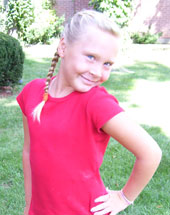
Meet Olivia(for more information visit AdoptUsKids)
Olivia is a nine year old, beautiful young lady with blue eyes and blonde hair that
she loves to have braided. She is described as a girly girl who loves
to wear dresses and look nice. She wears glasses due to being blind in
her right eye. She is currently a 3rd grader in regular classes. Her
favorite food,that she would eat everyday if she could is grilled cheese
and tomato soup. Olivia likes to rider her bike and go swimming. She
loves to read, color and paint. She is involved in therapy and takes
medication to help with her behavioral challenges. Olivia can be
possessive of her things, which can lead to her behavioral problems
because she gets upset with others when they touch her things. She
thrives on and loves one on one attention from adults.
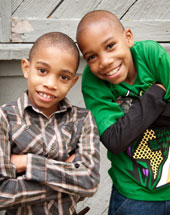
Meet Andrew & Dontez (for more information visit AdoptUsKids)
Andrew and his big brother Dontez are healthy and energetic boys.
Andrew is eight years old and in the second grade. He loves to build
and create things with Legos, blocks and play dough. Andrew likes to
play outside and his favorite sports are baseball and basketball. Dontez
is an active and rambunctious eleven year old who is very popular with
peers and teachers alike. He wants to be basketball player when he
grows up. Dontez is described as “an endearing and engaging youth who
is friendly and polite, with a good sense of humor. He is a positive
child and has good relationships. He is loyal to his family, despite
hardships he has endured in the past. Andrew and Dontez have
experienced significant trauma including physical abuse, separation and
loss. Dontez feels emotions deeply and is described by his worker as "a
very kind soul.” The boys are bonded with each other. The boys' worker seeks a family able to provide a loving home with firm structure, clear expectations, and frequent reinforcement of pro-social behavior including the use of healthy coping strategies. Their family should also help them learn to have fun in family activities. These delightful boys are eager for a sense of love and security.
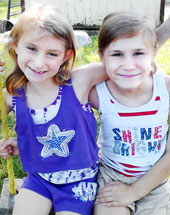
Meet Sarah & Savannah (for more information visit AdoptUsKids)
Sarah and Savannah area wonderful sibling group of 2 who are uniquely
different; but share a common need for a special forever family.
Savannah has a carefree personality and is happy and content for the
most part. She has relied on her sister heavily in the past. Savannah
has been diagnosed with a speech delay. She made great progress her
kindergarten year but is still behind academically.
Sarah is the
oldest of the two sisters and has a much stronger personality than
Savannah. She will sometimes try to speak on behalf of Savannah. Sarah
shows a wide range of emotions. Sarah obtains good grades for the most
part and is only slightly behind academically.
Both girls are very
needy of attention and have some boundary issues. Both girls are very
active. Both girls love things many girls their age enjoy such as
shopping, making crafts, and watching movies. Both enjoy being outdoors
and love animals. Sarah would like to be involved in dance,
cheerleading, or gymnastics.
Waiting Around the World
Not only are children waiting for family here in the USA, but there are millions of children waiting around the world. The children pictured and described below are from China, but there are children waiting in lots of countries. Could your family be their forever family?
Meet Dawn
Dawn is beautiful girl who will age
out in Febuary 2013. Dawn wants a family of her own. Dawn is being
cared for by a wonderful organization in China. She has spina bifida and is in a wheelchair, but she is able to get
into and out of the chair on her own and can get up stairs on her own.
She does her own self-care independently.
Someone who knows her personally wrote:
"Dawn is 12 and will age out of the program soon. She is aware of this. She
has spina bifida, uses a wheelchair and is studying grade 4 in local
school - and doing well. She is confident, articulate and happy. As Dawn is in the adoption program, one of our teachers that
has lived abroad in another culture and I took some time to really talk to her
about adoption this week. Dawn already has a degree of understanding
that adoption to another culture and language would be difficult (she is
used to playing and being around non-speaking foreign people that come
to the centre on short term teams), however, she has stated that she
would like to have a family, and that she would like to go abroad. She
is willing to work to overcome language difficulties for that. She is also aware that education,
future jobs and life in a place like the USA would be easier for her
than in China where wheelchair uses are still not supported well."
Meet Dean
Dean has Thallasemia and is currently waiting on China's shared list.
(Here is a short video about this special need: http://www.youtube.com/lwbvideos#p/u/6/zEh8R527NUo). Dean does not currently attend
school because he has to receive transfusions every 1-2 months. Because
of this, his developments in all areas are a little delayed compared
with his peers. Now he can walk up and down stairs independently, and he
can jump off the floor with both feet. He can walk in a straight line.
He can hold a pencil to draw lines and circles. Dean likes
coloring and he knows the concept of big and small, in and out, many and
few, right and left etc. He can identify different colors,
such as red, yellow, green, blue, white and black etc. He can count
from 1 to 10. He knows concept of week and he knows what day
it is today or tomorrow. His language development is average. He is
talkative and can carry simple conversations, but his some of
pronunciation is not so clear. He can feed himself and go to toilet on
his own. He can put on or take off his clothes, shoes and socks. He
likes to be helpful and do things such as fetching bottles for younger
children.
Dean is active and precious boy.
Every time when people come to his living group he is always the first
to call “mama” or “baba”, with loud sound and bright smile. He is very
active in outdoor activities, but in his room he likes sitting on his
own chair quietly to play toys or watch TV, very attentively. He gets
along very well with children in the same group. He is closest to the
caretaker who looks after him and other children in the same group. His
favorite toy is toy gun.
Dean receives blood transfusions every 1-2
months. Please pray that Dean finds his
forever family soon. There is a critical blood shortage in many
provinces in China. It
is crucial for the orphans that are transfusion dependent to find their forever families soon.
Meet Danielle
Danielle is a pretty little
girl who is active, fond of listing to music, playing games and watching
TV. She has a ready smile. She knows colors and animals, body parts and
can button and unbutton clothing. She can put on and take off her shoes
and clothes and stand on one foot for at least two seconds. She can
draw. She is not picky about food and her favorite food is rice. Danielle has normal mental
development. She knows things in her environment. She can count from one
to twenty. She can communicate with grown-ups. She often communicates
with people she knows. Danielle lives in the institution and her eyes reflect how much she
needs a forever family. A plastic surgeon look at
her file and said the area in and on the side of her mouth could
easily be removed and should be removed as to not interfere with her
eating.
As I right this blog post, I realize some of my readers may disagree with what I have to say. That is okay. All I ask is that you read what I have to say before making up your mind on the topic of Single Parent Adoption.
In An Ideal World
In an ideal world their would be no need for adoption. Every child would grow up in a happy, peaceful home with his/her married, biological mother and father. Social services would never have need to remove a child from a home because there would be no abuse, neglect, or abandonment. Parents wouldn't die and leave their children orphaned.
The World We Live In
The world we live in is far from ideal.
Research shows that the best situation for a child is to grow up in a home with his married biological mom and dad. But this isn't possible for millions of kids who can't live with their biological parents because of neglect, abuse, and abandonment, or death of parents. These children need to be adopted or they will grow up in an orphanage or bouncing around in foster care. Research shows that adoption is much better for children than growing up in an orphanage. Foster care was never meant to be a permanent solution for children. Foster care has always been meant to be a temporary home with temporary parents until children can either be restored to their biological family or be adopted.
Since the World We Live in Is Less than Ideal
Since the world is less than ideal, I propose that adoption by a single parent is one solution to the huge problem of orphaned, neglected, abused, and abandoned children in our world today.
Isn't one parent better than no parent? Isn't a stable home better than no home? Aren't children better off being adopted than growing up in an orphanage or bouncing around from foster home to foster home?
Unique Challenges
Single parenting does have unique challenges. One challenge is the need for role models that are the gender of the missing (for lack of a better word) parent. Children of a single mother need male role models. Perhaps a grandfather or uncle, or close family friend could fill that spot. Children of a single father need female role models. An aunt or grandmother could help fill that place. Could you be that role model?
Another challenge is the need for support. Because a single parent doesn't have the support of a spouse, they need outside support. They need your support.A single parent may just need someone to talk
to. She/he may need someone give them a break from parenting by keeping
there children for a few hours. Most single parents also have to work.
They would probably appreciate freezer meals and help with laundry or
housework. If you know a single parent who is fostering or has adopted,
please give them your support.
Courageous
To those parents who are brave enough to foster and/or adopt even though you are single, I to say "I admire you." What courage you have to adopt even when others oppose you! How brave you are to dare to parent without the support of a spouse! I also want to tell you, that "You can do it! You will be a wonderful parent!"
Single Parents Are a Success!
This is the story of the Thiel family. Meet a single mother who adopted three children.
Even though Andrew and I are adopting internationally, I want to do a blog post about foster care adoption. (We chose not to adopt from foster care this time, but are open to the idea if we decide to adopt again. )
Yesterday's post mentioned some of the obstacles to adopting from foster care. Today, I want to focus on the successes of adoptions from foster care.
Adoption Made A Difference in These Kids Life
On amazing success story is Jim Daly, the President of Focus. In this video, Jim Daly talks about the death of his mother, abandonment by his step father, being put in foster care and being adopted.
You Don't Have to be Perfect, to be a Perfect Parent
Today on National Adoption Day, 4,500 children in
foster care will be adopted. We celebrate with these children that they now having parents, a forever family, and a home.
But my heart saddens as I think of the 130,000 children in the US that are still waiting to be adopted. What obstacles are holding these children back from finding loving parents and a home?
Obstacle 1 - Misconception: Children in Foster Care have More Problems than Internationally Adopted Children
It is easy to believe that by adopting a child from over seas that he/she will have no history and will be arriving in your home with a blank slate. But that isn't the case. Children world wide become available for adoption for the same reasons children in the US are available: neglect, abuse, abandonment, death of parents, etc. Internationally adopted children have the same problems as children adopted from the US with the added problems of language barriers and culture shock. In addition, internationally adopted children also may have problems
from living in an orphanage, like institutionalized behaviors, malnutrition, scabies, intestinal parasites, rickets, etc.
Obstacle 2 - Misconception: What Did These Kids Do Wrong to End Up in Foster Care?
This misconception is so sad! Children are not in foster care because of any of there own actions. Children are in foster care because of neglect or abuse by parents.
Obstacle 3 - Misconception: Adopted Children Don't Turn Out Well
This is a major misconception that research has proven false. I have a lengthy blog post about how well children who are adopted adjust. Click here to read the blog post Adoption Myth Busters: Adopted Kids Grow Up To Break Their Parents Heart.
Obstacle 4 - Age The older children grow, the less likely they will be adopted. The majority of people want to adopt infants or toddlers. However, older children can actually fit into a new family and adjust better than toddlers. Older children understand what is happening and can verbalize their thoughts. Toddlers only understand that their world has changed and they are living with strangers. Older children may work very hard to make an adoption work because they know that this is their last chance to have a family.
Waiting to Be Adopted
Hear from some kids who are waiting to be adopted.
What It's Like Being Taken Away
Children adopted from foster care describe what it is like being taken away from their biological family.
The Hope of Being Adopted
Children who were adopted from foster care talk about the hopes they had of being adopted.
Hear From Parents who Have Adopted from Foster Care
Think you could never adopt from foster care? These parents did not think they could either!
When my wife and I felt called to adopt, I remember thinking, All kids need is a little love. Now, as I reflect on our experience of adopting six children from foster care, I realize that those are some of the most naive words we ever allowed ourselves to believe. As so many well-meaning parents do, we approached adoption and foster care thinking that our love could somehow erase our children's past hurts. Reality hit our expectations head on--and reality inevitably gets the last word. We learned this lesson early when we adopted two boys, loved them and treated them as we would our biological children--and then wondered why they behaved in such a disruptive manner. My wife and I asked ourselves, What can we do differently? How can we help our children? There were no easyanswers. What we learn is that when adopting a child who comes from a difficult situation, we must expect some form of hidden pain to emerge. You can't always predict when, where, or how, but you can be certain threat pain will surface. Several years after joining our family, one of my sons was going through a dark time in his young life. As we talked, he confessed that he had always believed it was his fault that he and his brother had been placed in foster care. He couldn't shake this belief. When my son confessed this to me, I desperately wanted to ease his pain, as I did when he cut his finger or scraped his knee. But I came to realize that it's almost arrogant to believe that my love alone will heal my child's wounds. Just as only Jesus can heal me, I now recognize that He alone can heal my child. Over the years, I've learned a lot about my role as a dad. It is my job to protect my children and provide them with structure and guidance. It is my job to give them a safe and loving home and to support them with professional help when needed. But perhaps my most important role is to mode for my children a humble recognition of human limitations and, in turn, our utter dependence on Jesus. When I entrust my children, and all of their pain, to His transformational love, I admit that alone I cannot heal them. Instead, I point them to the One who can. (From Article "Adoption in Real Life" by Katie Overstreet in October/November 2012 Issue Thriving Family, a free magazine published by Focus on the Family. John Moore is a regular speaker at Focus on the Family's Wait No More events.)
Who are you? I remember wondering as I looked into the face of my young son. It was the moment when I first began to face the reality of the adoption journey and how it was different from my expectations. Long before I had a chance to get to know my son, I had created an unrealistic picture about who he would be. On top of that, I expected the adoption journey to be relatively easy once we brought our son home. Indeed, I'd convinced myself that adoption was little more than a historical fact of how a family came to be, not on ongoing journey. True, all parents start out with some unrealistic expectations. But for adoptive families, these unfulfilled expectations cal lead to disappointment and even disconnection between parents and children. When a child's history of pain and loss begins to depart from what parent's expected their adoption journey to look like, parents can be tempted to protect their wishful assumptions rather than acknowledge their child's history and feelings. When a child's behaviors begin to collide with the "way we do things as a family," parents can find themselves quickly nearing the pint of despair. I know these expectations well. When faced with this reality, my instinct was to respond by looking at my child and pointing accusing fingers as if to ask, "What's wrong with you?" As I began to lay down my assumptions, I discovered that my calling as an adoptive parent was to meet my child where he was. The adoption journey invites parents to move beyond what we want and embrace what our children need. And as we let go of our expectations, we find that God's desires for us and our family are so much greater than what we ever anticipated. In both the good times and bad, in both the joy and the pain, God is writing a story of hope, redemption and love within our lives. I am still learning who my son is. And I have come to see that he doesn't have to become more like me or even who I thought he would be in order for our family to become the "we" that God intended. (From Article "Adoption in Real Life" by Katie Overstreet in October/November 2012 Issue Thriving Family, a free magazine published by Focus on the Family. Bold added for emphasis. Michael Monroe and his wife, Amy, lead Tapestry Adoption and Foster Care Ministry.)
After adopting two children through foster care, my husband, John, and I thought our family was complete. But we soon felt that God had other plans, that He wanted us to continue growing our family through adoption.
We had many objections, of course: We already have two kids. Will we be able to give them enough attention and care? Life with Daniel and Anna is great. Why would we go through the adoption the difficult process again?
Those were all reasonable concerns. But at the end of the day none seemed as important as our continued sense of God's leading.
We talked to Daniel and Anna, of course, who supported the idea form the get-go. "Well, we have a family," they said. "They can come live with us!"
Daniel's and Anna's compassionate attitudes at such young ages helped us cut through the clutter in our own minds. God so often speaks through children. Eight months later, we finalized the adoption of our son Joshua. For Joshua, there would be no more moves. No more Trauma. No more uncertain future. He was home. And John and I were feeling...despondent. Yes, you read that right. A mysterious despair had crept into our hearts and minds. And then we had guilt from our feelings of despondency. Why should we have such feelings? The unfortunate truth is that the pain and difficulty associated with a child's past, and how the family must face it, are rarely discussed. There is shame involved, ant that shame leads to isolation and silence--the opposite of God's plan for our lives. I think John and I felt pressure to act as though everything were fine. Somehow we felt these emotional struggles indicated that we'd lost faith. Looking back, we know that this kind of thinking wasn't true, but it sure felt true at the time. It took many months before our feelings returned to normal. But God used that exceedingly painful and unwanted period to continue teaching us that we live by faith, not by feelings. Having gone through that difficult experience, John and I think that folks going through the same thing need to reach out and talk to others, seek professional help or join a support group. We know from Scriptures that God's grace is sufficient for us and that His power is made perfect in our weakness (2 Corinthians 12:9). He can and will work through our weakness.